

Logo
The Sugar Taboo: Why Bulk Sweeteners Remain Technologically Indispensable  The Sugar Taboo: Why Bulk Sweeteners Remain Technologically Indispensable
Written by Tamara Strebel
03.03.2026

The Sugar Taboo: Why Bulk Sweeteners Remain Technologically Indispensable

Contact person

The Sugar Taboo: Why Bulk Sweeteners Remain Technologically Indispensable

Tamara Strebel

Senior Sales & Product Manager

IMPAG AG

+41 43 499 25 65E-mail LinkedIn

Sugar, often simplistically labeled as "white poison," is increasingly becoming a taboo subject within the health megatrend. While reduction is demanded and reformulation is a current reality, bulk sweeteners such as dextrose, fructose, or glucose syrup remain indispensable in the food industry.

The reason is fundamental: they provide the structural and functional backbone of the food matrix. This focus report examines the technological advantages and the specific differences between various bulk sweeteners to facilitate optimal selection for your specific application. We analyze the full spectrum, from glucose syrups and dextrose to high-intensity sweeteners, demonstrating how functionality and sweetening power can be precisely controlled. Furthermore, we address whether sugar reduction is achievable using bulk sweeteners. 

Spoiler: It is. Discover how our technical expertise and supply security as your local partner can enhance your value chain.


More information


Technological Advantages and Applications: Function Over Sweetness 


Dextrose and Fructose 

As monosaccharides, dextrose and fructose are the elementary building blocks of sucrose, yet in their isolated form, they exhibit significantly more specific technological profiles. Their simple molecular structure allows for the targeted manipulation of physical parameters, making them essential tools for fine-tuning complex formulations.

Shared Advantages:

  • Freezing Point Depression: Prevents ice crystal formation; essential for the creaminess of ice cream.
  • Extended Shelf Life: Optimal water retention and targeted reduction of the AW value.
  • Dispersing Aid: Ensures uniform distribution of dry substances within a medium.

Dextrose (Grape Sugar or Glucose):

  • Rapid Energy Delivery: As a monosaccharide, it is absorbed immediately; ideal for sports and energy products.
  • Moderate Sweetening Power & Flavor Harmony: At approximately 70% the sweetness of sucrose, it is ideal for savory applications like soups and sauces.
  • Cooling Effect: Endothermic dissolution creates a characteristic fresh sensation in the mouth (ideal for compressed tablets).
  • Fermentation Aid: Serves as a directly fermentable nutrient for yeast cultures, accelerating dough fermentation and improving pore structure.

Fructose (Fruit Sugar):

  • High Sweetening Power & Label Optimization: With approximately 130% relative sweetness, fructose allows for a reduction in total sugar volume while maintaining the flavor profile.
  • Intense Browning Effect: High reactivity in the Maillard reaction (6:1 ratio compared to dextrose) ensures attractive browning and crust formation.
  • Low Glycemic Index: With a value of approximately 25% (compared to 65% for sucrose), it has a significantly lower impact on blood glucose levels.
  • Hygroscopicity: Effectively binds moisture, keeping baked goods moist for longer periods.


Maltodextrin and Dried Glucose Syrup 

These products of starch hydrolysis serve as a technological bridge between native starch and pure glucose. Their properties are primarily determined by the Dextrose Equivalent (DE value).

Common Advantages:

  • Excellent Bulking Agents: Increase dry matter content without excessive sweetness.
  • Mouthfeel Optimization: Improve viscosity and creaminess while providing "body" to the product.
  • High Solubility: An ideal base for dry mixes and instant products.
  • Neutral Flavor: Does not mask the intrinsic aromas of other ingredients.

Specific Characteristics:

  • Maltodextrin (up to DE 20): Acts as a functional texturizer and carrier; protects flavors and vitamins from oxidation and regulates osmolarity in sports nutrition.
  • Dried Glucose Syrup (DE 20+): Provides body and sheen; offers moderate sweetness and supports browning and smoothness in ice cream.


Liquid Glucose Syrups: Precision via DE Value and Sugar Spectrum 

The term "glucose syrup" refers to a complex mixture of mono-, di-, and oligosaccharides. Similar to maltodextrin, the central metric is the DE value (Dextrose Equivalent): a higher value indicates a syrup that is sweeter, less viscous, and more reactive.

Molecular Fine-Tuning

For optimal technological performance, the DE value is only one aspect of the profile. The specific sugar spectrum (DP values) is decisive for successful application:

  • DP1 (Monosaccharides): These control sweetening power, freezing point, and browning.
  • DP2 (Disaccharides, e.g., Maltose): These influence crystallization stability. "High Maltose Syrups" provide superior heat stability for hard candies.
  • DP3+ (Oligo- and Polysaccharides): These form the structural backbone for viscosity, "body," and moisture retention.

Application Advantages:

  • Crystallization Control: Inhibits sucrose precipitation in fondants and fillings.
  • Targeted Texture Control: Allows for dosages ranging from viscous-binding to free-flowing.
  • Brilliant Sheen: Imparts a reflective, mirror-like finish to glazes and sauces.
  • Efficient Logistics: Optimized for automated processing via IBCs or tankers.

Organic Quality for the Highest Standards

New to our Portfolio: Glucose syrups with EU-Organic and Bio Suisse certification.

We assist you in serving the growing market for sustainable foods with certified glucose syrups (EU-Organic and Bio Suisse compliance). Our solutions offer seamless traceability while maintaining the highly functional properties you expect.
 

Intelligent Sugar Reduction: Decoupling Volume and Sweetness

The reduction of sugar requires a modular approach: replacing the volume while simultaneously fine-tuning the sweetness intensity.

  • Texture and Volume Substitution: Soluble corn fibers and polydextrose replace the "bulk" of sugar with fewer calories. These ingredients also enhance the product as a fiber source ("High-Fibre")

    Find more

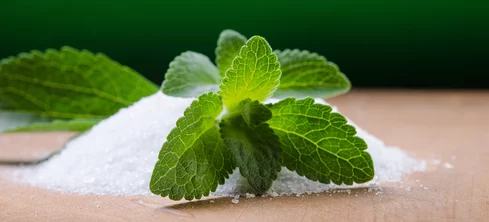
  • Precise Sweetening Power: Following volume stabilization, flavor is rounded off using Erythritol (a natural substitute). Alternatively, high-intensity solutions such as Sucralose, Stevia, or the modifier Thaumatin can be utilized.

    Find more

Innovation & Sugar Reduction

Sugar-reduced glucose syrup


Optimized nutritional values ​​with full functionality. Our sugar-reduced glucose syrup allows you to significantly reduce the declared value for "of which sugars" on the final product, while maintaining the total carbohydrate content and technological properties (viscosity, volume). A direct way to improve the Nutri-Score without complex recipe changes.
 

More Than Bulk: Your Value Add with IMPAG 

Bulk sweeteners are often seen as interchangeable raw materials; however, the difference lies in expertise and service.

  • Broad Quality Portfolio: Over 120 different syrups, from conventional to Bio Suisse (organic), ensuring the optimal technological and economic solution.
  • Reliable Logistics: Swiss-based warehousing and reliable bulk supply ensure maximum planning security.
  • Technical Know-how: We provide partnership-based consulting on the optimal degree of hydrolysis and sugar spectrum to optimize texture and shelf life.
  • Flexible Solutions: Whether liquid (IBC, tankers) or dry (powders, granules), we provide the appropriate handling for your process integration.

You might also be interested in

22.06.2018

Promitor Soluble Fibre

This dietary fibre has technological and nutritional characteristics that make it a leading ingredient for innovative products in the fibre enrichment and sugar reduction market.

28.11.2023

Stevia as a natural sugar alternative

The need for low-sugar foods is increasing. Stevia can be a natural solution for reducing sugar.

24.08.2025

Plant proteins in focus – applications, properties and suitable solutions from our portfolio

Proteins are no longer just a component of sports nutrition - they are now among the central functional raw materials in food production.